Flora in Kaziranga National Park
Kaziranga National Park is located in the Indian state of Assam, on the banks of the Brahmaputra River, which is important for the local ecosystem. Therefore, the river is essential for maintaining the natural habitat for wildlife. The vegetation in this biodiverse park consists of four major categories of vegetation. These are tropical semi-evergreen forests, alluvial grasslands, and Tropical Deciduous Forests. The disparity between the western and eastern regions is an important factor in the differences in plant species found within these regions. The western part of the National Park is primarily composed of low-lying wet meadows with many tall grasses (cane, elephant grass, and speargrass). Low grasses are found in certain areas of the park (cottonwood tree, Kumbhya, embara, and elephant apple trees). Kaziranga National Park has, throughout the years, provided an area for vegetation and for animals to graze. Therefore, Kaziranga National Park has also experienced flooding due to overpopulation in the surrounding areas. This is one of the main reasons for the abundance of green vegetative materials that serve as food sources to grazing animals. Because of the different characteristics of the vegetation and their contributions to creating a lush green environment, Kaziranga National Park continues to excel at creating an incredible and unforgettable scenery. It is characterized by both the nature of the land and by the vivid floral displays. You can find a wide variety of aquatic plants growing in all parts of the greater Brahmaputra River and the other bodies of water across the Brahmaputra basin. For example, the waters of the Brahmaputra basin are very rich in aquatic plants. A common aquatic plant is the water hyacinth. Ponds created by floods have contributed to the growth of short grasses, which are usually found growing around them. A flora survey of the Kaziranga National Park, conducted by several researchers in 1986, shows that the park supports a diverse variety of vegetation. It includes 41% tall elephant grass, 29% open forests, and 11% short grasses. e.
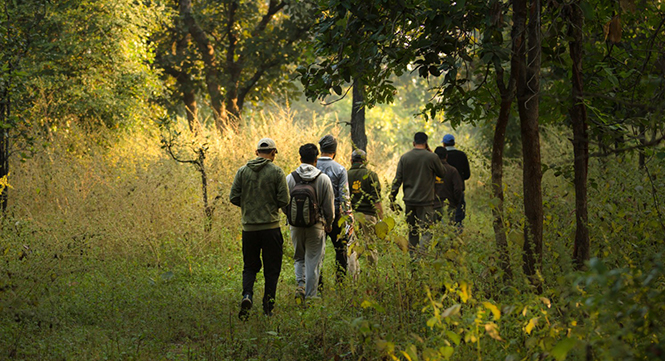
Forest Canopy
Dominated by Sal and high-quality Teak.
- Mighty Sal & Teak
- Dense Bamboo
- Tendu Varieties
Life-Giving Species
Food and timber for tribal ecosystem.
- Mahua Tree
- Aonla & Chironji
- Medicinal Herbs
Fauna in Kaziranga National Park
Home to tigers, leopards, and the Indian Giant Squirrel in a rugged mountainous setting.Kaziranga National Park is located close to the Brahmaputra River and covers an area of 378 square kilometers. It is one of the world’s largest parks, has been designated a UNESCO World Heritage Site, and is home to a wide variety of plants and animals. The presence of thick stands of elephant grass, as well as the wide-open spaces of meadows and marshes, provides excellent habitat for one-horned rhinos and Asian elephants. It also provides habitat for more than 2,000 one-horned rhinos, which is the largest population of rhinos found in the world. This park also has a wild population of water buffalo, elephants, East African swamp deer, gaur (bison), hog deer, sambar deer, Indian muntjac (barking deer), and wild boar. In addition to the many different species of vegetation and large herbivores found in Kaziranga National Park, there are also several forest-dwelling cats, such as Bengal tigers, jungle cats, leopards, and fishing cats. There were an estimated 110 Bengal tigers in Kaziranga as of 2006, and the park was designated as a tiger reserve due to the high density of tigers in the park
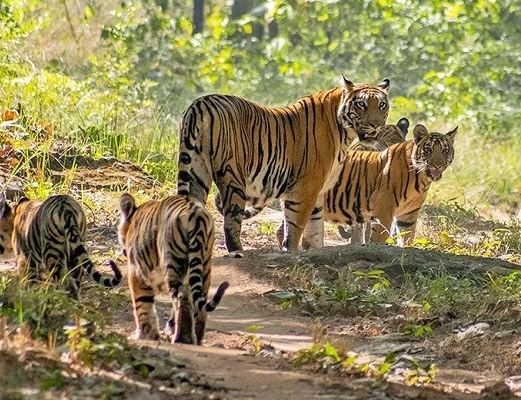
Big Cats & Mammals
- Royal Bengal Tiger
- Indian Leopard
- Sloth Bear
- Indian Gaur
- Wild Dog
- Four-horned Antelope
Avian & Other Species
Rich birdlife and unique species.
- Malabar Pied Hornbill
- Crested Serpent Eagle
- Indian Giant Squirrel
- Mugger Crocodile